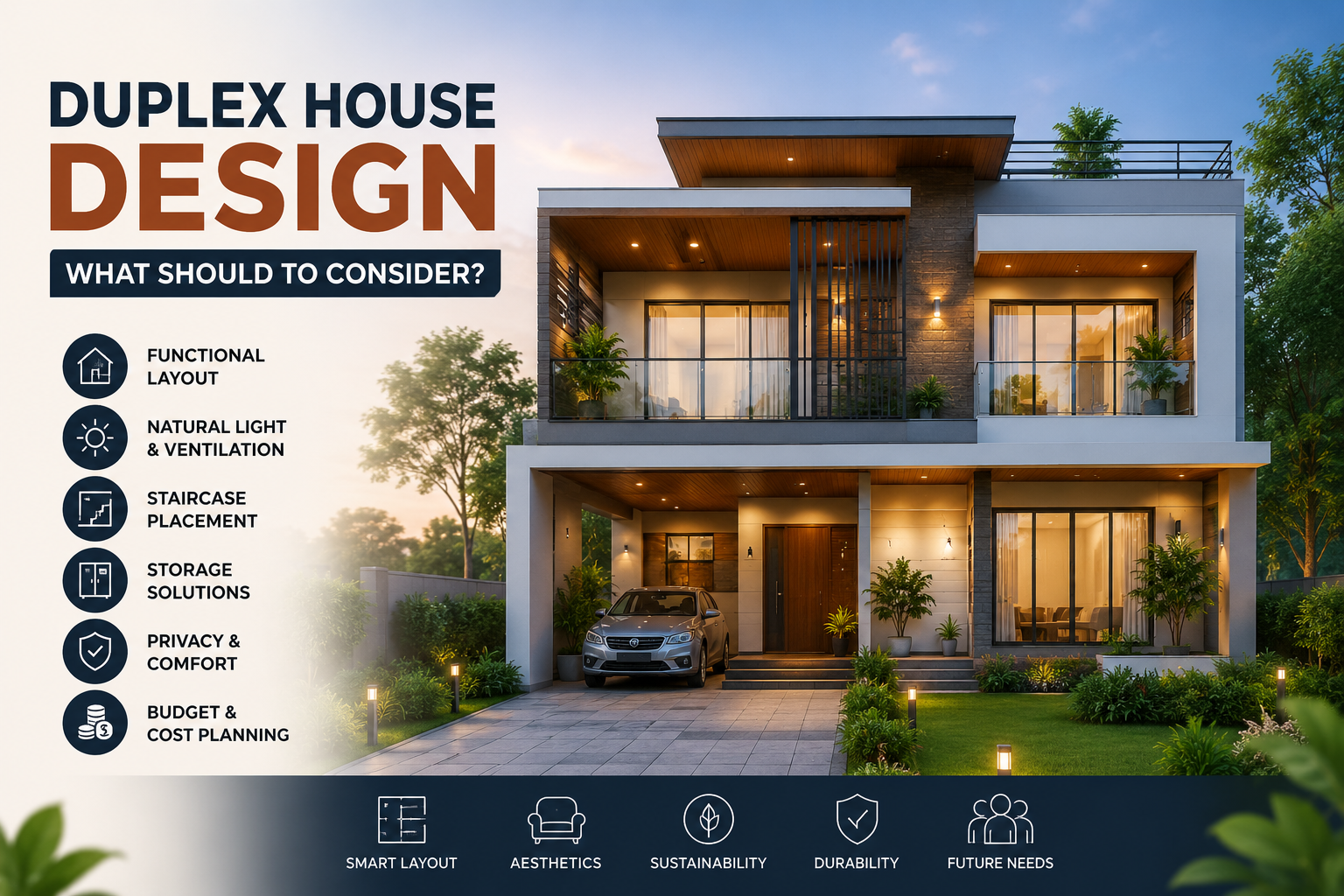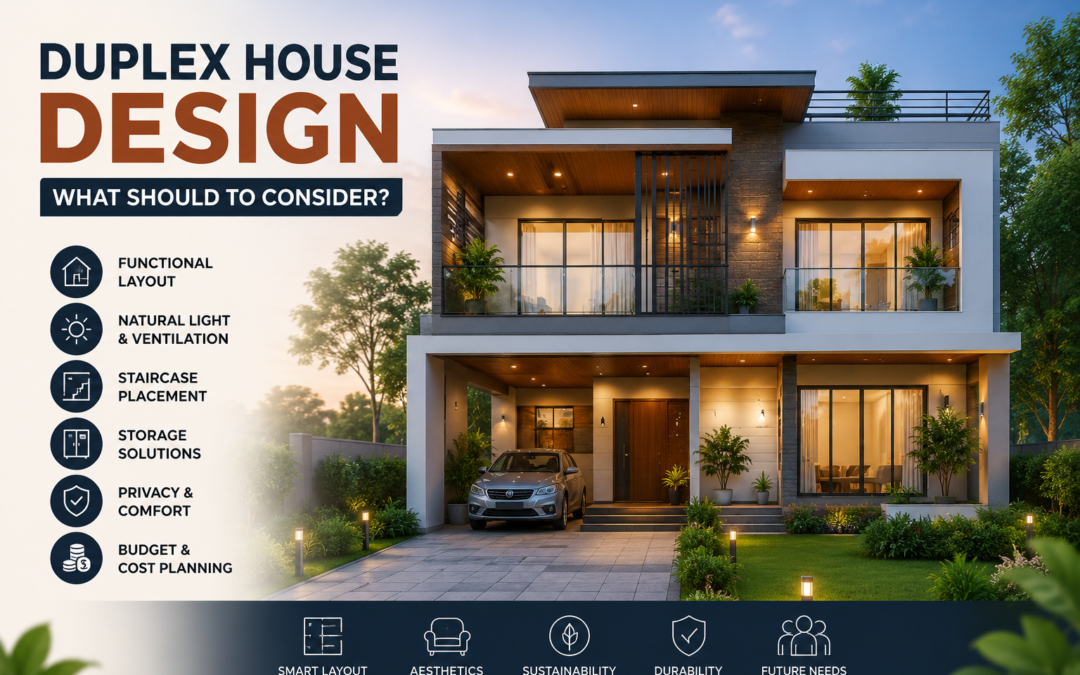
A duplex house can give your family more privacy, more room, and a stronger sense of home. Still, the extra floor does not automatically make the house comfortable.
Poor staircase placement, weak storage planning, oversized furniture, or an unclear budget can turn a promising design into a daily problem.
Before you approve the final plan, look at how both floors will work together. These eight points will help you make better decisions from the beginning.
What is a Duplex House?
A duplex house usually combines two living levels or units within one building. In a vertical duplex, one floor sits above the other and an internal staircase connects them.
Some families use separate floors for different generations. Others create one large luxury home with shared living areas below and private rooms above. A duplex may also be built as a rental or long-term property investment.
1. Check the Location and Plot Conditions
Start with the plot, not the furniture.
Notice where sunlight enters, how air moves, and whether nearby buildings block important windows. Think about road access, neighbourhood noise, privacy, drainage, and the direction of heavy rain.
A tall building beside your plot may reduce daylight and ventilation. A busy road may affect bedroom placement. These details influence the floor plan long before the interior work begins.
You should also confirm local building rules, setbacks, height limits, and other planning restrictions before finalising the design.
2. Set a Realistic Budget
A duplex budget has several layers.
You may need to cover architectural planning, interior design, materials, labour, furniture, lighting, electrical work, plumbing, approvals, taxes, and project management. The cost of building the shell is separate from the cost of completing the interior.
Keep a contingency amount for price changes or site problems. Do not spend the full budget on visible features and then compromise on wiring, waterproofing, hardware, or storage.
Ask for an itemised estimate so you can see where the money is going.
3. Plan Both Floors Around Daily Life
A duplex should reflect how your family lives.
The lower floor usually works well for shared spaces such as the living room, dining area, kitchen, guest room, and powder room. Bedrooms, family lounges, and private study areas can sit upstairs.
Still, there is no fixed rule. Elderly parents may need a bedroom on the ground floor. Children may need a safe play zone near the family area. Someone working from home may need a quiet office away from the main entrance.
Plan for real routines, not only presentation.
4. Give the Staircase Proper Attention
The staircase is the main link between both floors.
Its location affects movement, privacy, furniture placement, and the overall look of the house. A central staircase can feel dramatic, while a side staircase may give you more open floor space.
Comfort matters more than appearance. The steps should have a safe rise, useful width, proper handrails, and enough lighting. Also think about children, older family members, and how furniture will move between floors.
Under-stair storage can recover space that might otherwise stay unused.
5. Create a Visual Connection Between Floors
Two floors should not feel like unrelated homes.
You can connect them through consistent flooring, colours, lighting, wood finishes, or railing details. An open landing or glass partition near the staircase can also create a stronger link between the levels.
A double-height living room may make the house feel larger and more dramatic. But it also affects cooling, acoustics, cleaning, and lighting.
Use large walls with intention. Artwork, textured panels, pendant lights, or vertical shelving can stop tall spaces from feeling empty.
6. Build Storage Into the Design
Storage should be planned before construction finishes.
A duplex may have more floor area, but clutter still grows quickly. Think about wardrobes, kitchen storage, linen cabinets, shoe units, utility storage, and space for seasonal items.
Use awkward areas carefully. Under-stair cabinets, wall-height shelving, window seats with drawers, and fitted wardrobes can add useful storage without crowding the rooms.
I would also keep daily-use storage close to where items are needed. A large cabinet on another floor is not helpful when you need something every morning.
7. Choose Furniture That Fits the Scale
Furniture should match the room, not fight with it.
A large sofa may look impressive in a showroom but block movement inside your living room. Small furniture can also feel lost in a double-height space.
Measure doors, corridors, stair widths, and room dimensions before ordering anything. Keep enough walking space around beds, dining tables, and seating areas.
Custom furniture can be useful for unusual corners, under-stair areas, sloped ceilings, or built-in storage. Choose materials that suit your lifestyle and are easy to maintain.
8. Choose the Right Architect and Interior Designer
A duplex project needs coordination.
The architect may focus on structure, approvals, circulation, and building form. The interior designer studies layout, lighting, furniture, materials, storage, and how each room will feel.
Look for professionals who have handled duplex projects before. Review completed work, not only 3D images. Ask who will supervise the site and how often you will receive updates.
You should also take part in the design discussions. The designer needs to understand your habits, taste, family structure, and future plans.
Popular Duplex House Design Ideas
A few design ideas work especially well in duplex homes:
- Open living and dining areas on the lower floor.
- A family lounge or reading corner upstairs.
- A double-height living room with a statement light.
- Glass, wood, or metal staircase railings.
- A ground-floor bedroom for parents or guests.
- Built-in storage below the staircase.
- Large windows for natural light and ventilation.
- A home office separated from busy family areas.
Use only the ideas that fit your space and lifestyle.
Common Duplex House Design Mistakes
Many problems start when the design looks good but ignores daily use.
- Placing the staircase where it interrupts movement.
- Forgetting a bedroom or bathroom on the ground floor.
- Leaving storage until the end.
- Buying furniture before measuring the rooms.
- Creating a double-height area without considering cooling.
- Using different styles on each floor with no visual link.
- Starting construction without a detailed budget.
- Giving the designer too little information about your lifestyle.
These mistakes are easier to prevent than repair.
Duplex House Design Process
A clear process keeps the project organised and reduces late changes.
Consultation -> Site Visit & Measurement -> Requirement Planning -> 2D Layout -> 3D Design -> Budget Approval -> Material Selection -> Execution -> Inspection -> Final Handover
Review each stage before moving forward. Late layout changes can affect electrical points, plumbing, ceilings, furniture, and the project timeline.
FAQs
What is the ideal size for a duplex house?
There is no single ideal size. It depends on the plot, family size, number of bedrooms, local rules, parking needs, and whether the duplex is one home or two separate units.
Where should the staircase be placed?
The staircase should support natural movement without reducing privacy or blocking important living areas. It may sit centrally, along one wall, or near the entrance depending on the floor plan.
Is a double-height living room practical?
It can feel spacious and luxurious, but it may increase cooling needs, sound travel, cleaning difficulty, and lighting costs. Consider both appearance and maintenance before choosing it.
How can I make a duplex feel more spacious?
Use open sightlines, consistent materials, natural light, lighter colours, correctly scaled furniture, glass railings, and built-in storage. Avoid filling every wall and corner.
How do I maintain privacy between floors?
Place shared spaces downstairs and private bedrooms upstairs. You can also use controlled staircase access, partitions, acoustic doors, and careful bathroom and guest-room placement.
How much does duplex house design cost in Bangladesh?
The cost depends on floor area, design complexity, materials, furniture, structural changes, lighting, labour, and execution scope. A site visit and detailed BOQ are needed for a realistic estimate.
Final Thoughts
A successful duplex house is not simply a larger home.
It should give your family privacy without making the floors feel disconnected. It should have enough storage, comfortable movement, practical furniture, and a staircase that works for everyone.
Take your time with the early planning. Speak openly with your architect and interior designer. The more clearly you explain how you live, the easier it becomes to design a duplex that still feels right years later.